
What is tooth decay?
Tooth decay happens when bacteria eat away at the tooth structure. There are multiple reasons for teeth to decay. Of course, we can always blame genetics, diet, a high-sugar diet, including a lot of candies, a lot of cookies, soft drinks, energy drinks, or sometimes it's oral hygiene, brushing, and flossing.
What are the signs of tooth decay?
Signs can include dark lines in the tooth, sensitivity to hot and cold, or pain to sweets or biting.
What happens when you have tooth decay?
When you have tooth decay, you have a bag of bacteria sitting on the tooth, and first it's going to eat away the tooth structure, cause sensitivity and pain, and you may lose the tooth because it's a bag of bacteria. It's going to spread to all the other teeth, and you swallow all the bacteria as well. It kind of causes some side effects in your body.
Can tooth decay cause other complications in the body?
Tooth decay does lead to complications. Sometimes the infection in the tooth can spread to the face and, once in the lower jaw, it can block the airway so you cannot breathe, or it can spread to the eyes or even to the brain. Tooth decay, if we wait too long, can be very life-threatening.
Can early tooth decay be stopped or slowed down?
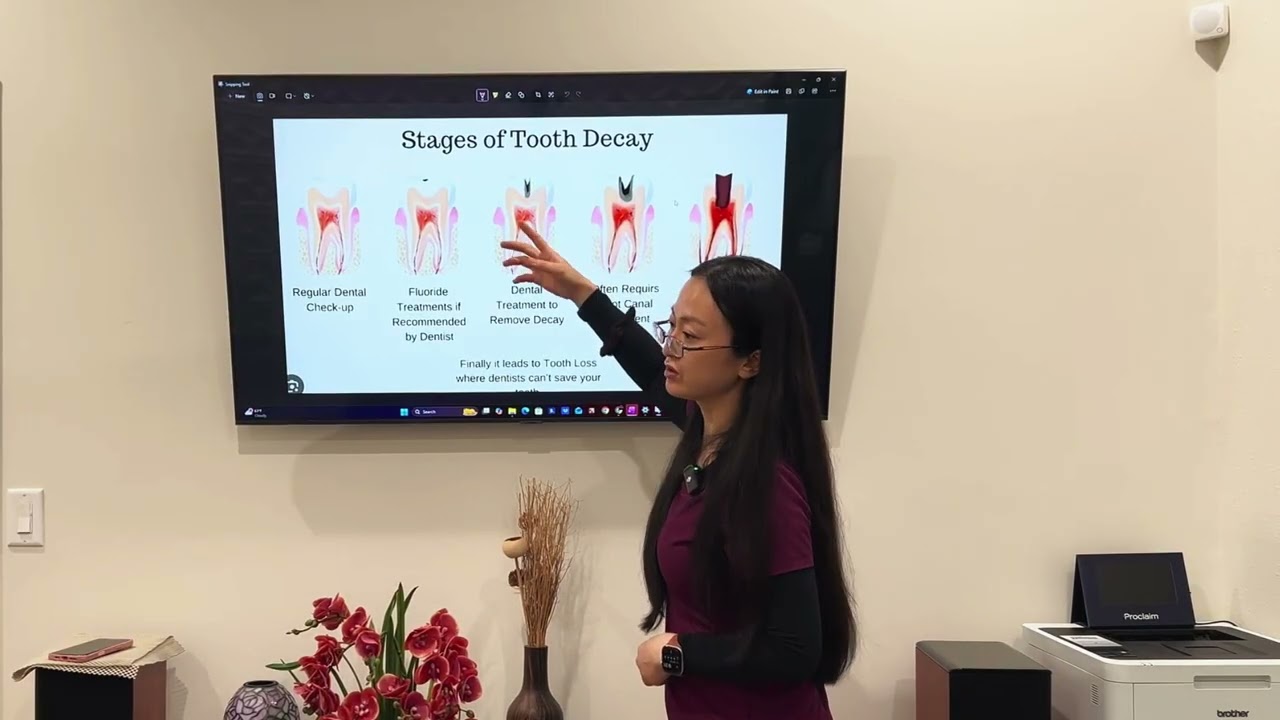
If it's at the early stage, we actually have a lot of traditional, like new ways to stop and slow it down. We have stages of tooth decay.
For people with good oral hygiene, they do normal checkups, meaning every three months or six months, you do the X-ray cleaning, go home, brush, and floss. Normally, you don't have much when you have early tooth decay, which is going to be a small spot.
What are the layers of the tooth?
Actually, let's go back to the tooth structure. This one is the bone around the tooth. This is the whole tooth. On the outside is the harder layer that's called enamel. It protects your teeth and is more resistant to decay. The inner layer is a little soft. It has some nerve-like sensations. Inside is the actual nerve that supplies the blood and the feeling to the teeth.
How is very early tooth decay treated?
When they grow to the very early stage, enamel-wise, we can do a procedure called the caries SDF. It's a medication to stop decay and kill the bacteria. We also have a procedure called Curodont, which uses a peptide to rebuild the structure. At that stage, it's reversible, and we will recommend a high-fluoride treatment, at least in the short term, to stabilize and harden the tooth.
When do you need a filling?
Once they pass the junction between the outer layer and the second layer, that's the time we need to worry about getting a real tooth filling. A tooth filling just removes the decay and rebuilds the structural area.
What happens if the cavity gets too deep?
Once the cavity grows really deep and really causes pain, meaning the nerve has died in the patient, or it goes all the way in to cause structural damage, then we may have to. At this stage, even at this stage, the tooth decay is no longer reversible.
What are the treatment options for different stages of decay?
The earliest stage, fluoride is a good treatment, more like prevention. Then, the extra treatment, once it's at a very early stage, we can use the SDF to kill the bacteria and/or use Curodont to rebuild the tooth structure.
Of course, for some early, early decay or grooves, we use sealant to seal them up so they no longer become a weak link or food catcher, so we can prevent future decay.
What should you do if you think you have tooth decay?
First, go to the professionals to identify tooth decay. Second, we do the treatment needed, either prevention, medicine, or fill it up before it gets too big. Then good oral hygiene, flossing, and brushing are always the best dental insurance for your tooth decay.
When does tooth decay start to hurt?
Tooth decay is normally not painful until the very late stage because once tooth decay is close to the nerve, that's when the pain starts.
How often should you get checked for tooth decay?
I would recommend every three to six months. Six months is a safe time zone to see any tooth decay and get it fixed before it spreads.
If you’re ready to schedule an exam or would like to learn more about our services, we’d love to hear from you. Call us at (210) 866-8730 or email [email protected]. We look forward to caring for your smile.